This page summarises what Brisbane City Council and the Queensland Government publish. It was checked in November 2026. It covers the Brisbane City Council area only: Logan, Moreton Bay, Redland and Ipswich have their own rules. It is a guide, not advice on your property: confirm with council on 07 3403 8888 before work starts.
Check your tree
Answer each question. The next one appears as you go, and the likely answer updates below.
Start with where the tree is.
This is a guide from the published rules, not a ruling on your property. A vegetation protection order, a development approval condition, a covenant, heritage listing or mapped koala habitat can change the answer. Confirm with Brisbane City Council on 07 3403 8888 before work starts.
Brisbane protects trees by map, not by size
Trees on private land are covered by council's Natural Assets Local Law 2003. Interfering with protected vegetation without permission is an offence, "even if the vegetation is on your property". Source: Brisbane City Council
The local law sets no height or trunk size for protection. A tree on private land is protected when it grows in one of council's mapped layers:
- Waterway and wetland vegetation: along creeks, rivers and wetlands, natural or man-made.
- Significant native vegetation: native plants of any size, from ground covers to large trees.
- Significant urban vegetation: mature or prominent trees, native or exotic, including those with historical or cultural value.
The local law defines each one as an area on council's mapping system, not by a measurement. Sources: council's protected vegetation page, Natural Assets Local Law 2003, Schedule 4
A tree outside those layers can still be protected by:
- a vegetation protection order (VPO) on that tree, group of trees or area
- a condition of a development approval, which stays with the land when it is sold
- a covenant on the title, or a heritage listing
- state rules, for mangroves and other tidal plants
Anyone can nominate a tree on private property for a VPO, including a neighbour, and council has an urgent nomination service. A tree that isn't protected today can become protected. Source
Protection covers the whole tree: the trunk, canopy, foliage, flowers and the root zone, which is the soil under the canopy to a depth of 1 metre. Source
"Interfere" is wide. It includes lopping or topping, poisoning, ringbarking, cutting branches or roots other than permitted pruning, and damaging the root zone by digging, filling or compacting. Source: Schedule 4
How to check your property
- Make a protected vegetation enquiry. It asks for your name, email and address, and council emails you a map of protected vegetation and a PDF report. Council lists no fee for it. The report uses the latest data council has, and council doesn't guarantee its accuracy. Source
- Or look up your address on council's community map (land and environment).
- For trees protected by a development approval condition or a covenant, email council at specialistservices@brisbane.qld.gov.au. Source
- Still unsure? Phone council on 07 3403 8888. Source
Protected vegetation is more likely if the block is near the Brisbane River or a creek, in bushland or a rural area, has large trees, or has heritage values. Source
When you can go ahead without a permit
If the tree isn't protected, you don't need a council permit at all. If it is, the local law lists exemptions. They apply only to trees inside your own property boundary, and not to significant landscape trees, or to trees protected by a development approval, covenant, heritage listing or tidal rules. Source
Close to the house
| Block size | Whole trunk within |
|---|---|
| 4,000 m² or less | 3 m of the house |
| Over 4,000 m² | 6 m of the house |
Only the house counts. The rule applies to a lawfully built dwelling that is lived in. There is no exemption for distance from a shed, pool, pool fence or other structure. Measure from the far side of the trunk. Source: section 44(1)(f), measuring
Pruning up to 20%
Pruning for maintenance or safety is exempt if no more than 20% of the live foliage comes off in any 12 months, and the cuts are spread over the crown so the tree isn't left lop-sided. It must be done to AS 4373, the Australian Standard for pruning amenity trees. Lopping and topping count as interference, so they are never exempt pruning. Source: section 44(1)(e), council fact sheet
Pest trees
Trees on council's pest lists can be removed without a permit, even in a protected layer. The work must not damage protected plants around them, and must keep soil disturbance and erosion to a minimum. No arborist has to identify the tree first; council's weed identification tool helps, and it is worth keeping photos. Source: section 45, council
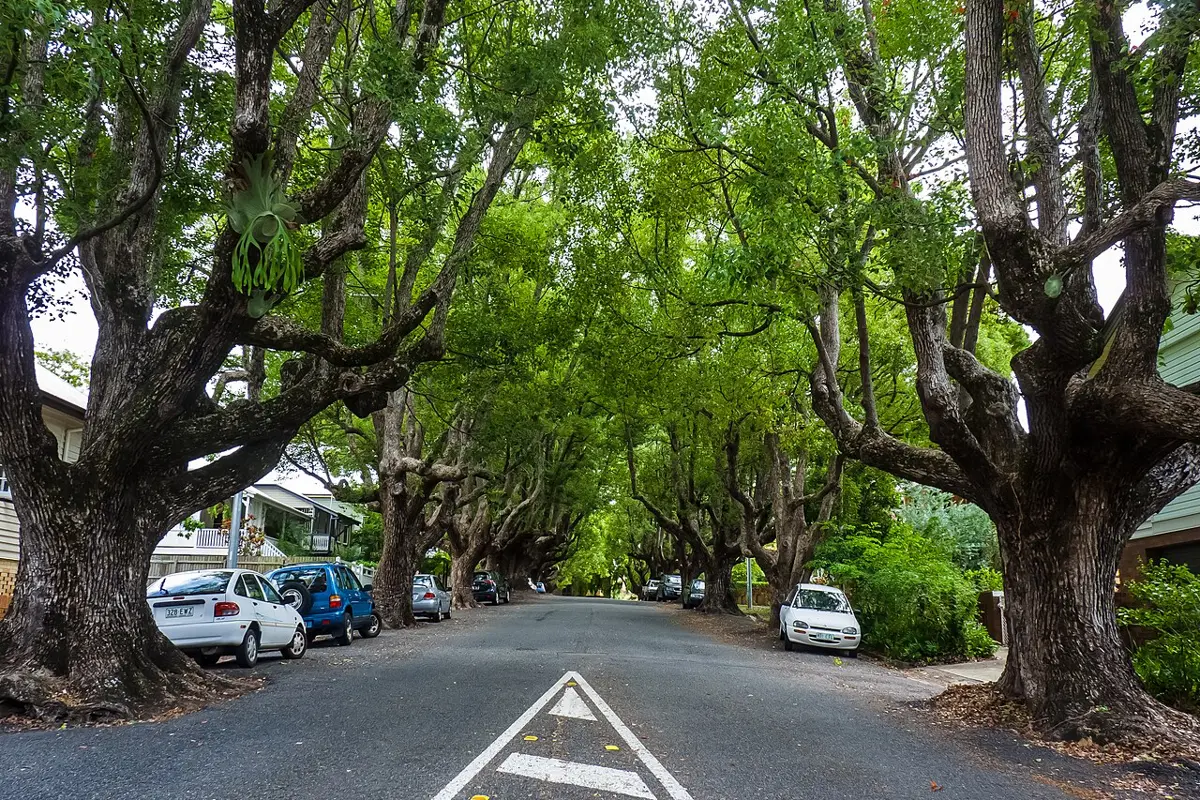

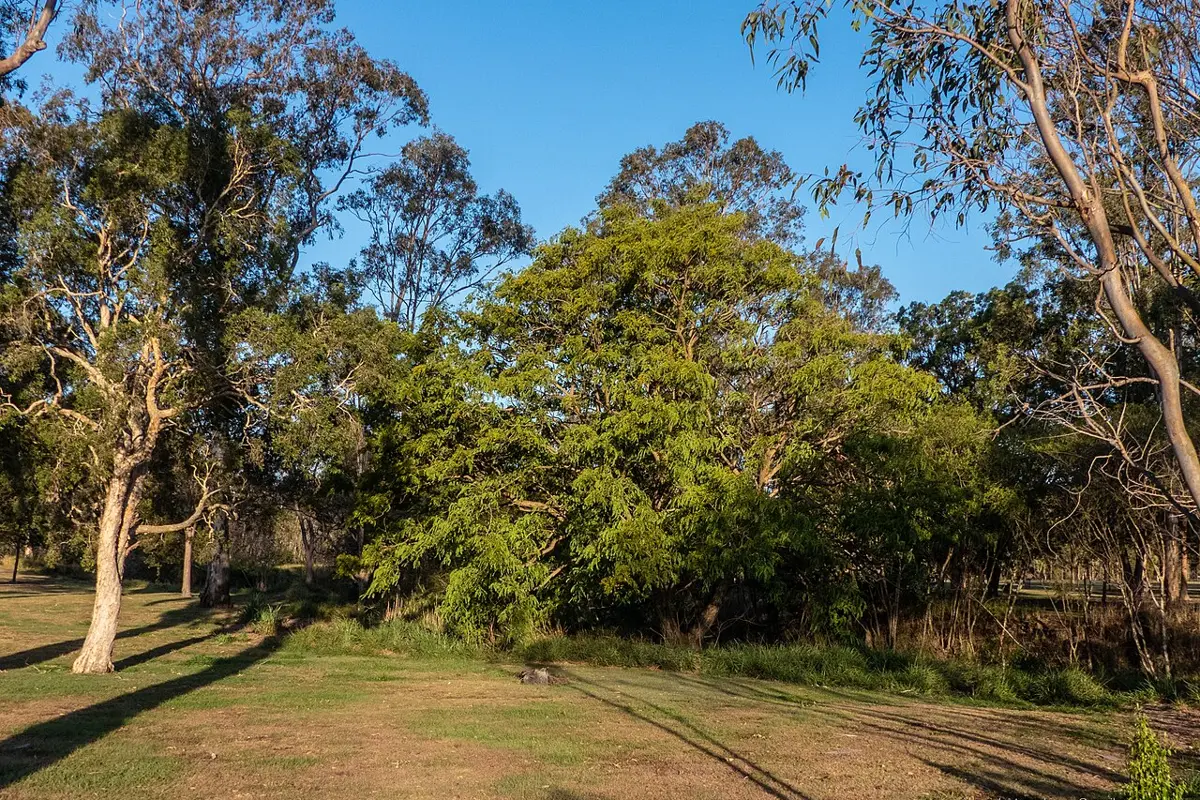

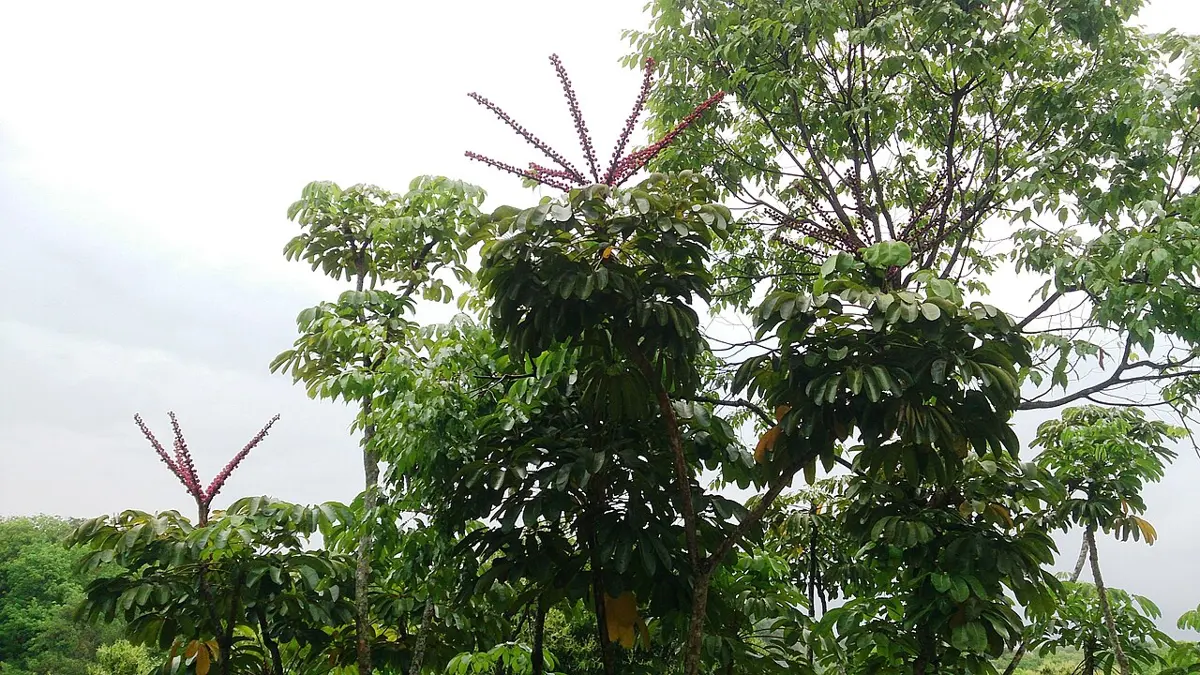

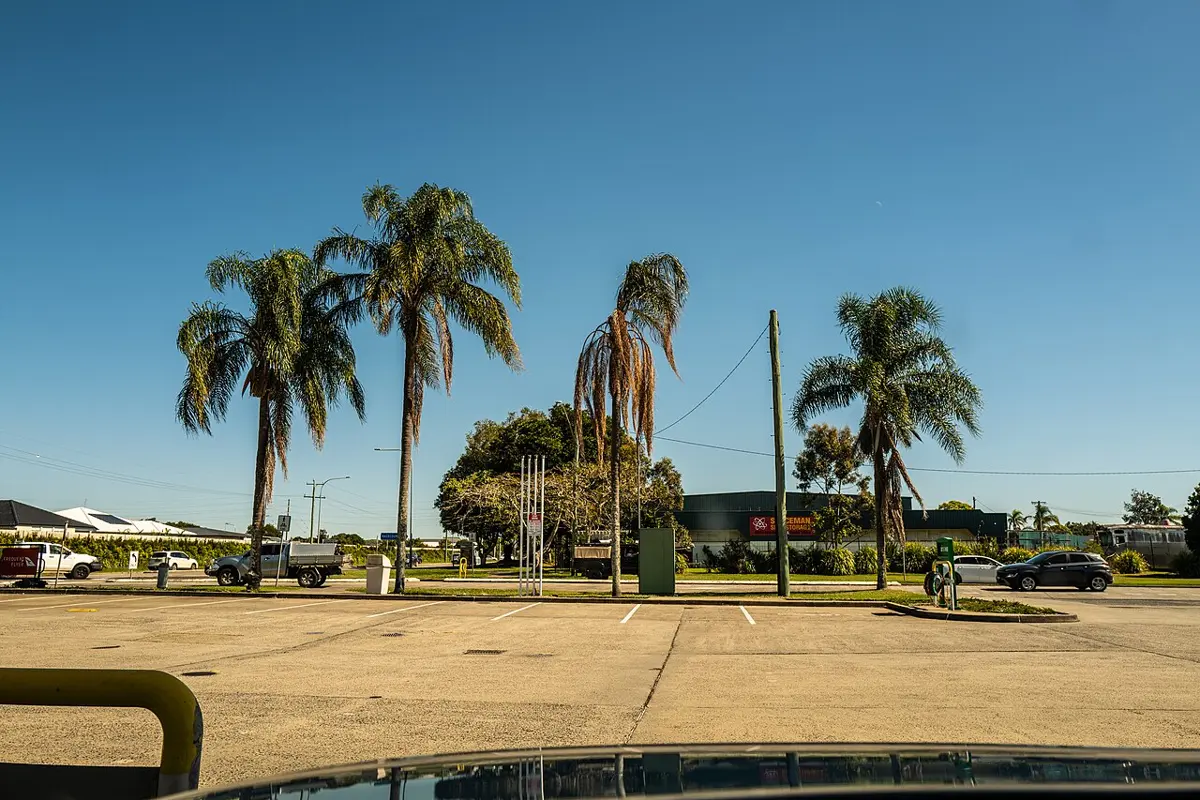

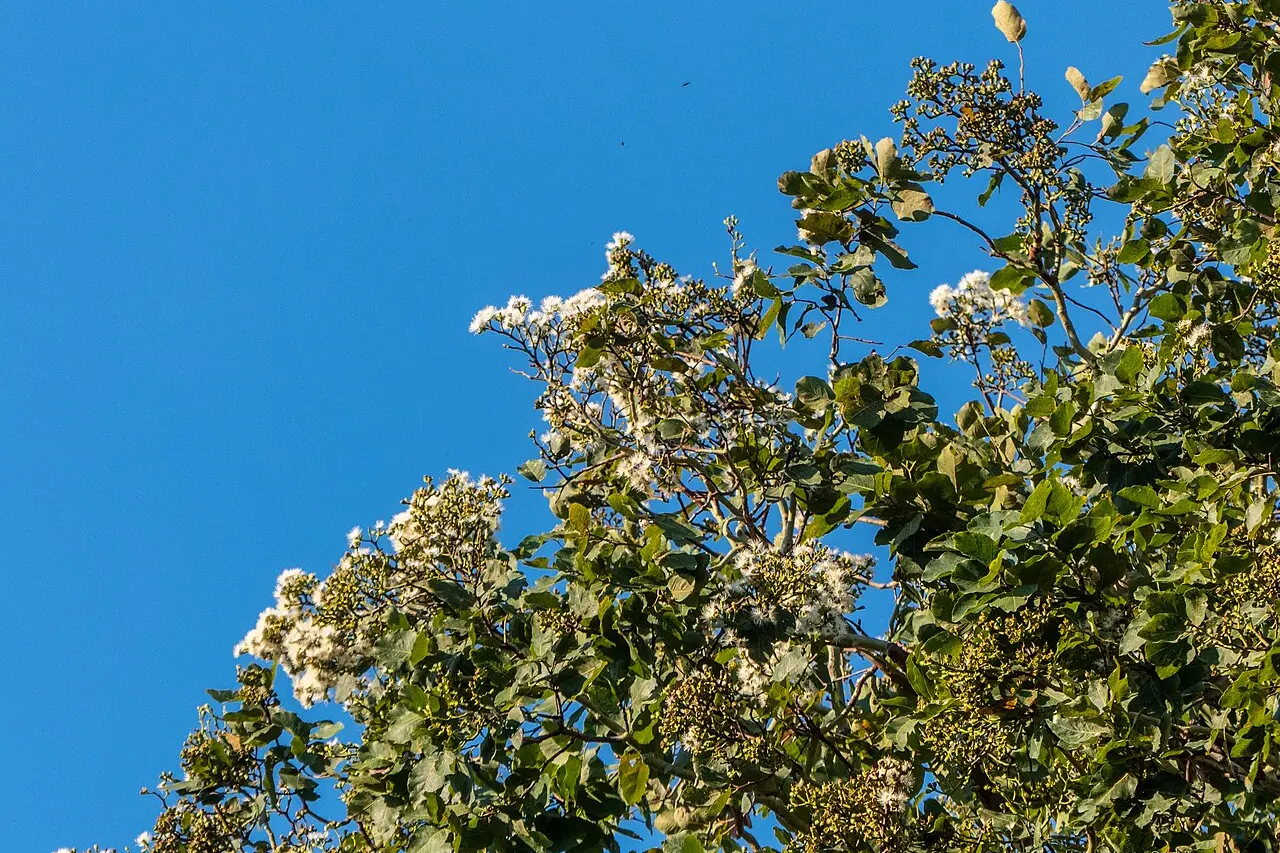

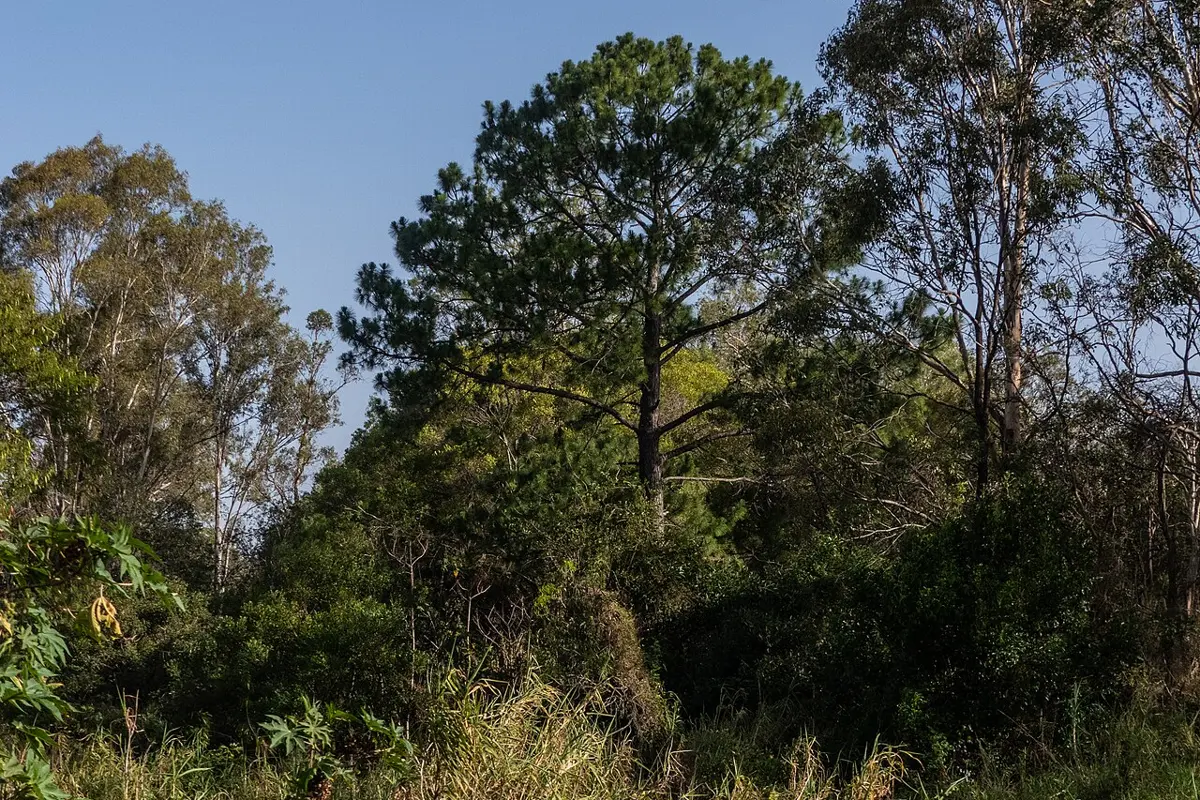

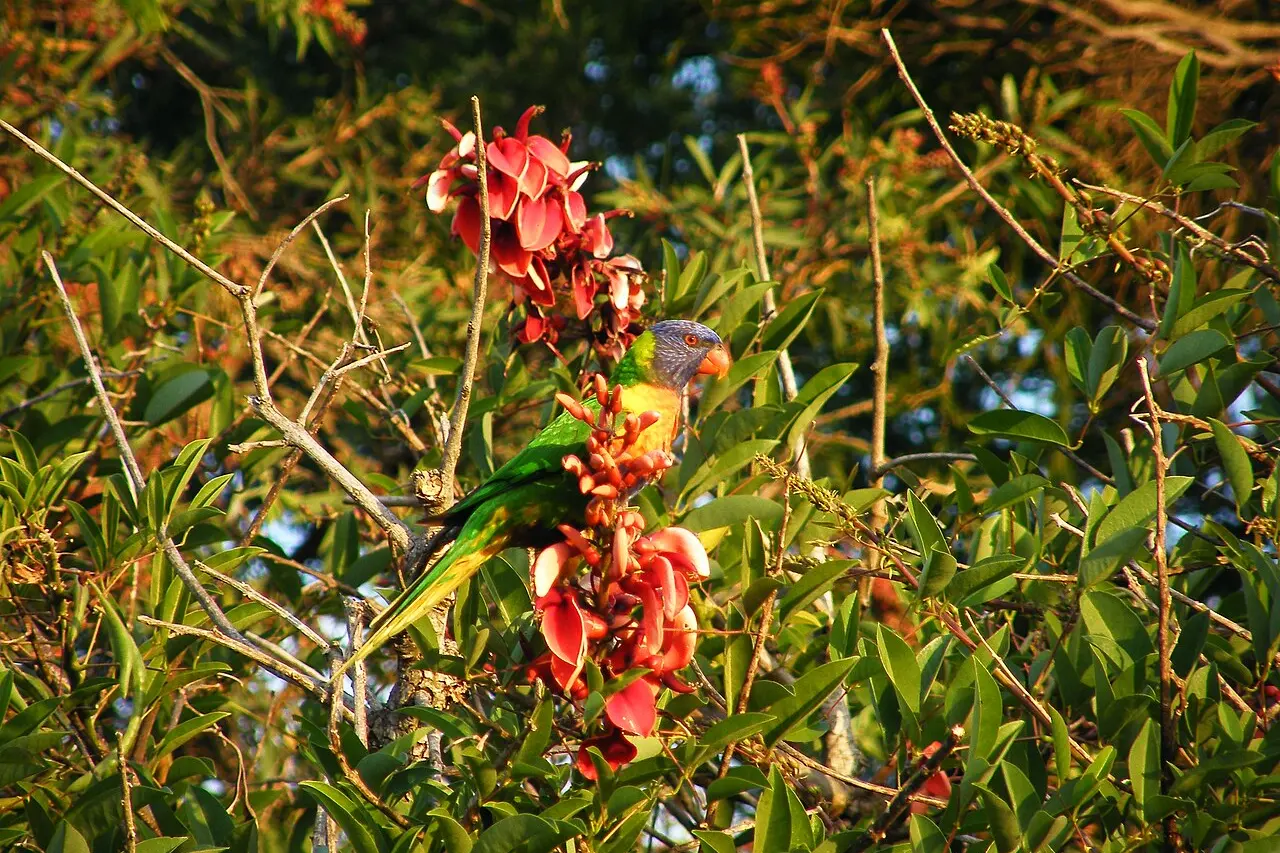

The exemption doesn't cover a pest tree that is a significant landscape tree, or one protected by a development approval, covenant or heritage listing. Jacaranda is on council's list, but council says jacarandas are "protected in some places", so ask before removing one. Sources: council's pest vegetation list, Biosecurity Plan for Brisbane
Small dead trees and garden plants
- A dead tree, or a dead limb, under 20 cm across and not providing habitat for native animals. Source: section 44(1)(j) and (k)
- Garden plants with a trunk under 30 cm across at 1.4 m above the ground. Council's fact sheet describes this as maintenance, so ask council before removing a garden tree on this basis. Source
Dangerous and storm-damaged trees
You don't need a permit to remove a tree, or part of one, that is an immediate and significant threat to people or property: a split trunk, for example, or a tree leaning with the soil heaving at its base. The same applies to clearing needed for emergency access.
You must prove it afterwards. Send council adequate photos within 10 business days of the threat event, to CARS-NALL@brisbane.qld.gov.au. Council may then ask for an arborist's report. If you can't show the tree was an immediate threat, council can take compliance action. Source: council fact sheet, section 44(1)(b) and (c)
Take the photos before the tree comes down. A protected tree that is dying, or dead and 20 cm or more across, but not an immediate danger, needs a permit unless another exemption applies.
Significant landscape trees
These lose almost every exemption: any pruning, removal or work in the root zone needs a permit, and the application needs a report from an AQF Level 5 arborist. A tree is one if a vegetation protection order names it as an individual tree or group, or if it is a large fig, mango, poinciana, jacaranda, native pine or certain gum on an Emerging Community zoned block over 810 m². If you are not sure, ask council. Source: Schedules 2 and 4, council
If you do need a permit
"All permit applications are free." Source: Brisbane City Council. For a one-off job, such as removing a tree, apply for a short-term permit:
- online through council's protected vegetation application, or
- by email to CARS-NALL@brisbane.qld.gov.au, or by post
Include:
- the type and number of trees, or the area being cleared
- photos showing the health, structural or nuisance problem
- a map of where the work is
- the owner's signed approval, or a body corporate seal, if you don't own the property
- an AQF Level 5 arborist report, for a significant landscape tree
Council says it will contact you within 20 business days. That is when it responds, not necessarily when it decides. A permit can come with conditions, such as replacement planting, an offset payment where replanting isn't practical, a fauna spotter-catcher, or a completion date. Afterwards you lodge a declaration of compliance. Sources: protected vegetation permits, applying for a permit
Building or subdividing? Council won't issue a permit before the development application is decided. Source
Penalties
Council says penalties "range from infringement notices to prosecution for serious offences", and it can also require restoration or compensation. Source
The local law sets the maximum penalty in penalty units: 50 units where the tree's replacement value or the cost of fixing the damage is $4,000 or less, and otherwise 500 units for a person or 850 for a company. It applies to anyone who interferes with the tree or "causes or permits" it, so the owner who hires the crew can be liable as well as the crew. Source: section 7(3)
Council gives the 2026–27 penalty unit as $172.70, which makes 50 units about $8,635. Council states that value for parking fines, so treat it as a guide to the scale for tree offences, not a confirmed figure. Source
Koala habitat and state vegetation rules
State rules sit on top of council's. In mapped koala habitat areas in South East Queensland, interfering with koala habitat is prohibited or regulated, with limited exemptions such as removing dangerous trees. Source: Queensland Government. A native tree that council's rules let you remove can still be covered. The Queensland Government sends a free vegetation management property report with the koala map for your block, usually within 3 business days.
Trees on the footpath or in a park
Street and park trees are council's and protected under the same local law. You need permission to prune, remove or interfere with them, above or below the ground. Source
- Small branches over your front fence, driveway or footpath: apply for a minor street tree pruning permit. It is issued straight away and is free. Source
- Anything bigger: ask for a tree maintenance assessment or a tree removal assessment, or phone 07 3403 8888. A council arborist decides what, if anything, is done.
- Council won't act for leaf, fruit or flower drop, shade on a pool or solar panels installed after the tree was planted, views, fence-line pruning or major height reduction. Source
A neighbour's tree
Neighbour tree disputes fall under Queensland law, which is the same across the state.
- You may cut overhanging branches and roots back to your boundary line, but must respect any tree protection. Source
- In Brisbane, if the neighbour's tree is protected, cutting it back is exempt only within the 20% limit. The local law's own example: it is not exempt if the overhang is 20% of the live foliage, or if removing all of it leaves the tree lop-sided. Beyond that you need a permit and the owner's consent. Sources: section 44(1)(e), council
- For branches overhanging by more than 50 cm and less than 2.5 m above the ground, you can give the neighbour a formal notice (Form 3) allowing at least 30 days. If they don't act, you can have the branches removed and recover up to $300 a year. Source
- Higher branches, and trees likely to cause serious injury or damage, can go to QCAT as a last resort. The application fee is $405.60. Source: QCAT, fees
Trees near powerlines
Energex runs the network in Brisbane.
- Energex trims trees growing into street powerlines, normally free of charge. Source
- Trees near the service line from the pole to your house are generally the owner's responsibility. Source
- Energex says to hire a professional arborist or tree trimmer for vegetation near powerlines, and never to do it yourself.
- For a street tree growing through or within 1 metre of overhead lines, council says to contact Energex on 13 12 53. Source
- If a tree or branch is touching a powerline, stay at least 10 metres away and call 000. Source
Who is responsible for getting a permit?
You are, as the owner, and the law can hold you liable for work you arrange. Ask the tree business quoting your job whether they think the tree is protected, keep a copy of your enquiry report or permit, and take photos before any emergency removal.