This page summarises what Sunshine Coast Council and the Queensland Government publish. It covers the Sunshine Coast Council area only: Noosa Shire is a separate council and is not covered here. It was checked in November 2026. It is a guide, not advice on your property: confirm with council on 07 5475 7272 before work starts.
Check your tree
Answer one question at a time. The next one appears when it matters, and the likely answer shows below and updates as you go.
Start with where the tree is.
This is a guide from the published rules, not a ruling on your property. A tree that is exempt under council's planning scheme is not necessarily exempt from Queensland Government rules. Use council's checklist, keep a copy of the result, and confirm with Sunshine Coast Council on 07 5475 7272 before work starts.
No size test: it depends on the exemptions
Under the Sunshine Coast Planning Scheme 2014, vegetation clearing in every zone is either "exempt vegetation clearing", which needs no application, or needs a development permit. There is no height or trunk size below which a tree is free to remove. Source: Table 5.8.1
"Vegetation" includes dead trees. "Vegetation clearing" covers removing, cutting down, ringbarking, poisoning and damaging roots, among other things. Source: Schedule 1 definitions
Council's compliance page lists what needs a permit for protected vegetation: cutting down trees, cutting into or damaging the trunk, pruning to the extent that the tree is likely to die, and clearing plants under the canopy. Source: Sunshine Coast Council
Pruning
Pruning is not vegetation clearing on the Sunshine Coast unless it removes the tree's trunk, or cuts the branches so severely that the tree is likely to die. Ordinary pruning needs no council approval, whatever the size of the block or the overlays on it. Source: Schedule 1 definitions
When you can go ahead without an application
These are the exemptions most homeowners can use. One is enough.
| Exemption | Conditions |
|---|---|
| Lot of 1,000 m² or less | Up to 600 m² cleared in total. Not on a local heritage place, not mapped character vegetation, not next to the Environmental management and conservation zone. |
| Lot over 1,000 m² | No area limit. Not in a mapped native vegetation area, waterway or wetland, not within 10 m of the high bank of a natural creek or wetland, not in a landslide hazard area, not heritage or character vegetation. |
| Within 3 m of a lawful building or structure | Measured from the centre of the trunk at ground level to the nearest edge of the foundations. Not if an approval requires the tree to be kept. |
| Pest trees in the Biosecurity Plan | Up to 250 m² cleared in total. Not on a local heritage place, not mapped character vegetation. No arborist identification needed. |
| Emergency works | An immediate threat to life or property, no other lawful option and no time to apply. Tell council in writing as soon as it is done. |
| Rural zone | Property maintenance: farm tracks, fences, sheds, crops, pasture and orchard trees. |
The lot size, 3 m and pest tree exemptions do not apply where a development approval on the land requires the tree to be kept. The lot size exemptions also do not apply where a vegetation protection order, covenant or easement protects the vegetation. Source: Schedule 1, "exempt vegetation clearing"
Boundary fences. Council's online checklist also treats a tree within 3 m of a boundary fence as exempt, measured to the nearest edge of the fence foundations. If the boundary has no fence, ask council. Source: council's vegetation clearing checklist
Character vegetation is mapped in the Beerburrum, Beerwah, Blackall Range, Buderim, Glass House Mountains, Maleny, Nambour, Palmwoods, Sippy Downs and Yandina local plans. Source
What switches the exemptions off
Council says exemptions may not apply where the area to be cleared is subject to:
- conditions of a development approval
- a vegetation covenant
- a biodiversity offset
- a voluntary declaration
- restrictions after unlawful clearing
Source: Sunshine Coast Council
Council's checklist screens for these first:
- Priority Development Areas, such as Aura (Caloundra South), Maroochydore City Centre and Sunshine Coast Airport. Economic Development Queensland, not council, is responsible there. Source
- Master planned and Development Control Plan areas. Council says you need written advice first.
- Vegetation protection covenants. Written advice is recommended.
- Koala habitat in a koala priority area. Written advice is recommended (see the koala section below).
Source: council's vegetation clearing checklist
Pest trees you can usually remove
Plants listed in the Sunshine Coast Biosecurity Plan 2024 can be cleared without an application, up to 250 m² in total, away from local heritage places and mapped character vegetation. The planning scheme and council's checklist do not ask for an arborist to identify the tree.
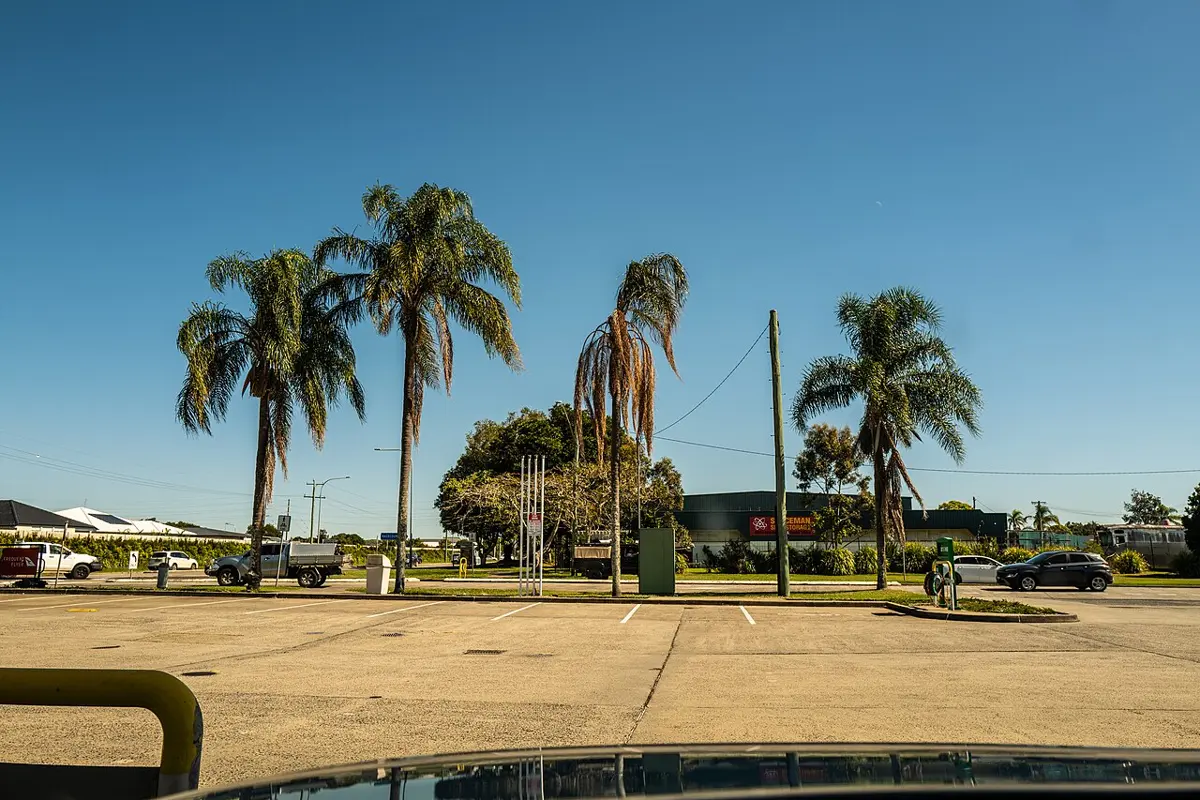

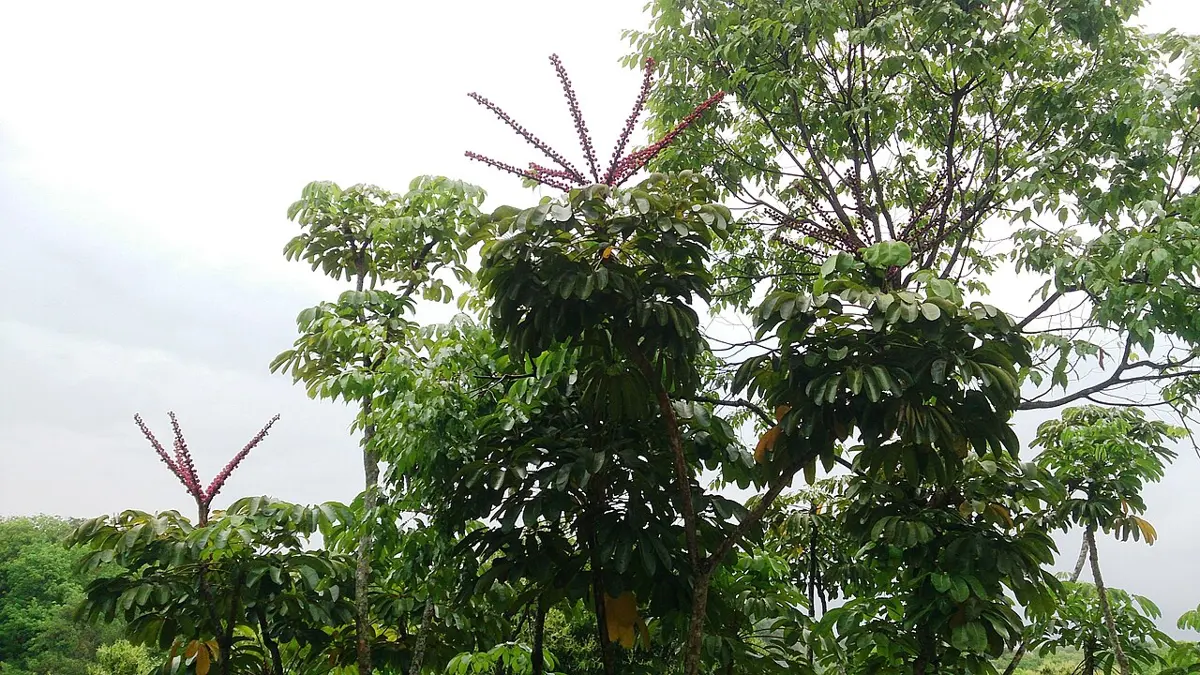

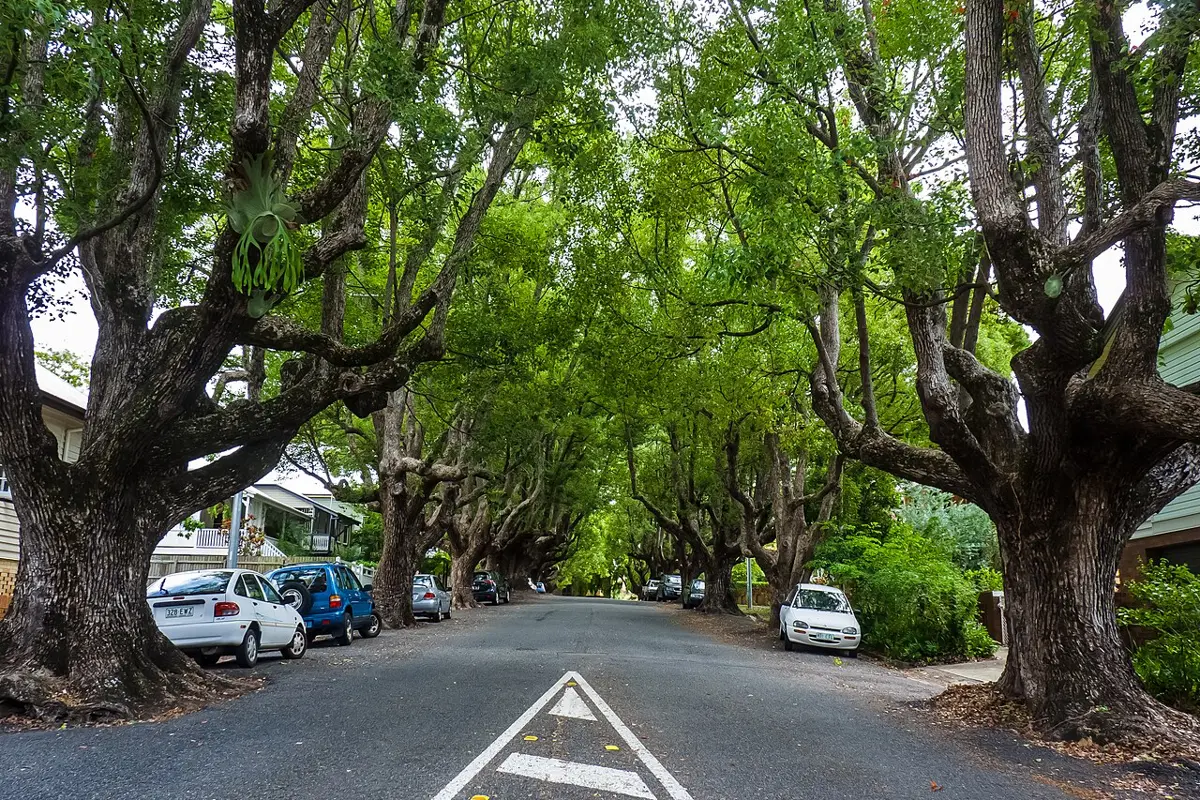

Other trees on the list include African tulip tree, broad leaf pepper tree, broad-leaf privet, Chinese celtis and autograph tree, plus shrubs that can grow to small trees, such as yellow oleander, yellow bells, Brazilian cherry and ochna. The umbrella tree is native to north Queensland but is listed as invasive in southern Queensland. Source: Sunshine Coast Biosecurity Plan 2024 and council's priority invasive plants
The planning scheme also mentions plants that are "otherwise an exotic species". Council's checklist only asks about Biosecurity Plan species, so for any other non-native tree, ask council for written advice or rely on another exemption.
Dead and dangerous trees are not automatically exempt. A dead tree is still vegetation. The emergency exemption needs an immediate threat to people or property, no other lawful option such as pruning, and no time to apply. Council says to get an arborist report first if you can, keep photos, and tell council in writing as soon as the work is done. Source
How to check your property
- Work through council's vegetation clearing checklist. You pick the property on a map, and it shows whether you need an application, need written advice, or are exempt. Keep the copy it emails you as evidence.
- Open the free Development.i site report for the zoning, the overlays and any earlier approvals and their conditions.
- Ask the Queensland Government for a free vegetation management property report. It includes the koala habitat map and usually arrives within three business days.
- Still unsure? Ask council for written advice: send photos, a description of the work and the lot and plan. It costs $385 for a house lot and council says it replies within ten business days of payment.
- Or phone council on 07 5475 7272.
Source: Sunshine Coast Council and council's vegetation clearing fact sheet
If you do need approval
You lodge a development application on the State's DA Form 1: operational work, development permit, code assessment, "Private Tree Removal". Council asks for a site plan (a map screenshot with the trees circled is enough), photos of the trees and a cover letter explaining why, with any arborist report. Source: council's how-to guide
| Council fee, 2026–27 | Amount |
|---|---|
| Domestic vegetation clearing application | $385 |
| Written advice, house or dual occupancy | $385 |
The register lists the application fee as one line and does not say whether it covers several trees, so ask council when you apply. Council does not publish a processing time for these applications. Source: Development Services register of fees and charges 2026–27
Clearing without approval
Carrying out development without a permit is an offence under the Planning Act 2016. The court can impose up to 4,500 penalty units, or 17,000 on a heritage place. Source: Planning Act 2016, s 163
In 2024 council reported that a hinterland resident who cleared vegetation from the road reserve in front of his property, and dug a driveway without approval, was ordered to pay $56,516.26 in fines, compensation and costs. Source: Sunshine Coast Council, July 2024
Koala habitat and state vegetation rules
State rules sit on top of council's, and council's checklist warns that an exempt result is not necessarily exempt from Queensland Government legislation.
- In koala habitat inside a koala priority area, clearing native vegetation is prohibited unless a state exemption applies. Exemptions include removing dangerous trees, firebreaks next to infrastructure and a once-off 500 m² allowance per property. Source: Queensland Government, exempted development information sheet
- Outside priority areas, the Queensland Government assesses clearing of koala habitat as well as council. Source
- The state definition of interfering with koala habitat does not include lopping a tree. Source
- Firebreaks: in a mapped bushfire hazard area, state law lets you clear a firebreak protecting a building up to 1.5 times the height of the tallest vegetation next to it, or 20 m, whichever is wider, and a fire management line up to 10 m wide. Council says to get advice from a bushfire specialist first. Source: Planning Regulation 2017, sch 6, council
Whether your block is mapped is specific to the property. Check council's checklist or the free state property report. State vegetation clearing exemptions
Trees on the footpath or in a park
- Clearing any vegetation on a road verge, footpath or nature strip needs a council permit. Permits are generally only granted for trees council assesses as low value, on the verge next to your property, and not for views. The fee is $348, you need $2 million public liability cover, and applications go in at least six weeks before the work. A tree removed under permit has a $400 replacement charge. Source: Sunshine Coast Council, permit form, register of general fees 2026–27
- You can prune branches from a council tree that overhang your boundary by more than 0.5 m and are within 2.5 m of the ground, back to the boundary only. Anything else is for a council arborist: use the arborist request form. Council says investigations can take up to four weeks.
- For urgent hazards, call council on 07 5475 7272, at any hour.
- Trees on main roads such as the Bruce Highway and Sunshine Motorway are for the Department of Transport and Main Roads, on 13 19 40.
Source: Sunshine Coast Council arborist services
A neighbour's tree
Neighbour tree disputes in Queensland fall under state law, and council says it does not resolve them. Source
- You may cut overhanging branches and roots back to your boundary line. You cannot go onto the neighbour's land to do it.
- On the Sunshine Coast, cutting back overhanging branches is pruning, so it does not normally need council approval, as long as it doesn't kill the tree.
- For branches that overhang by more than 50 cm and are less than 2.5 m above the ground, you can give the neighbour a formal notice (Form 3) allowing at least 30 days. If they don't act, you can have the branches removed and recover up to $300 a year from them.
- Higher branches, and trees likely to cause serious damage or injury, can go to QCAT after you have tried to resolve it directly. The QCAT application fee for a tree dispute is $405.60.
Sources: Queensland Government, QCAT and QCAT fees
Trees near powerlines
- Energex runs the power network on the Sunshine Coast. Source: Energex
- Council says pruning within 1.3 m of a powerline must be done by Energex: call 13 12 53. Source: council
- Energex trims trees growing into the clearance space around street powerlines, normally free of charge.
- Trees near the service line from the street pole to your house are generally the owner's responsibility. Energex says to hire a professional arborist or tree trimmer and never to do it yourself.
- If a tree or branch is touching a powerline, stay at least 10 metres away and call 000.
Source: Energex, trees and powerlines flyer
A new planning scheme is coming
Council is preparing a new planning scheme to replace the 2014 scheme. As of November 2026 it has not commenced, and council says decisions should not be based on the proposed scheme. The rules on this page are from the 2014 scheme. Source: Sunshine Coast Council
Who is responsible for getting approval?
You are, as the owner. Ask the tree business quoting your job whether they think an exemption applies, and keep a copy of council's checklist result, any written advice or approval, and photos before work starts.