Grinding or full removal?
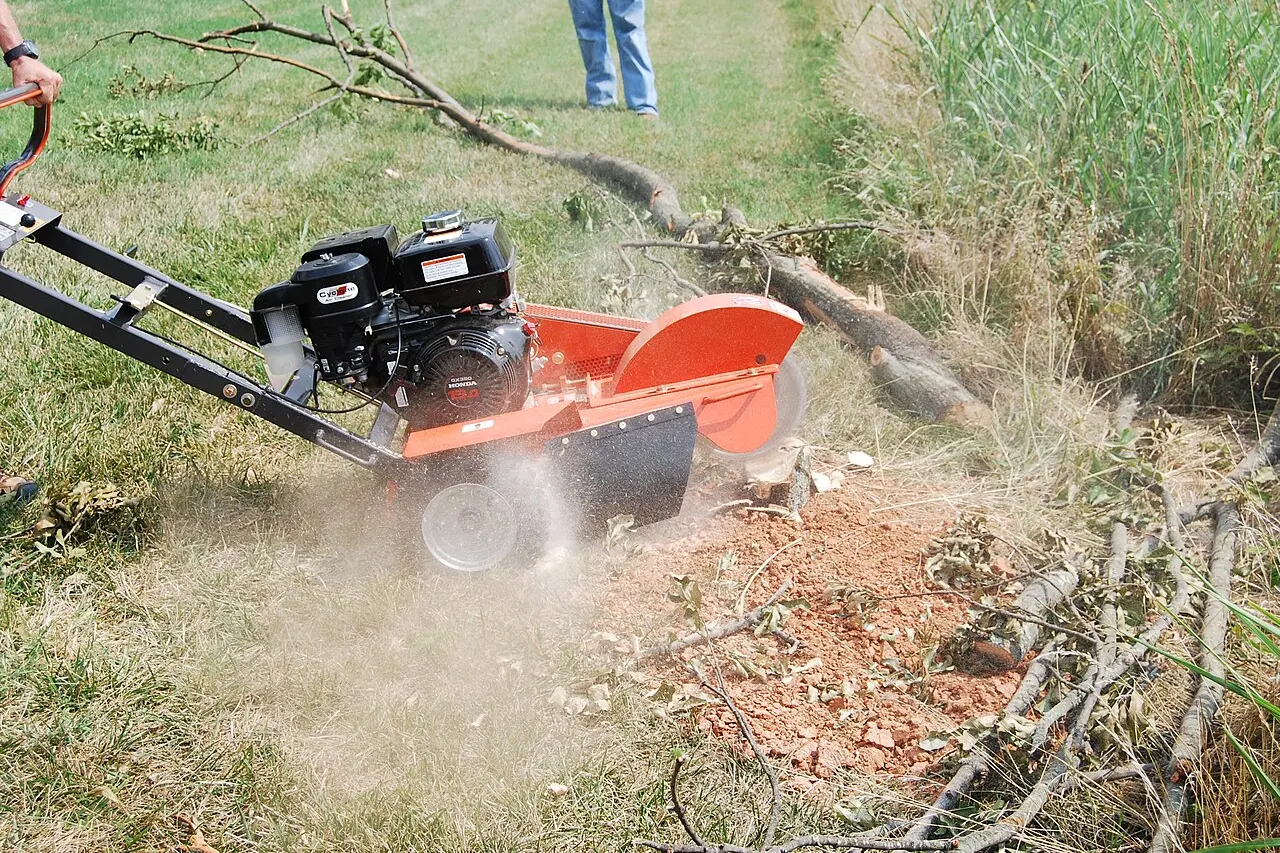
Grinding uses a machine with a toothed wheel to cut the stump down below the surface. The main roots stay in the ground and rot away over time. It is quick, and it leaves the yard mostly undisturbed.
Full removal digs out the stump and root ball with an excavator. It costs more and leaves a large hole, so it is mostly used where footings, a slab or a pool are going in.

How deep should it be ground?
Tell the person quoting what you plan to do with the spot, because that sets the depth.
| Plan for the spot | What to ask for |
|---|---|
| Lawn or turf | A standard grind, enough for topsoil and grass over the top |
| Garden bed or a new tree | A deeper grind, with the grindings swapped for soil |
| Paving, concrete or a shed slab | A deep grind and removal of the surface roots in the footprint |
| House footings or a pool | Full removal by excavator, not grinding |
What to measure before you ask
- Width at ground level, across the widest point including the root flare. Stumps are priced on this.
- How many stumps. Several in one visit cost less each than one on its own.
- The narrowest gate or path between the street and the stump. Small grinders fit through a standard side gate; large ones do not.
- Anything buried nearby: irrigation, stormwater, gas, power and NBN.
Underground services. Before You Dig Australia gives free plans of buried services. Ask who is lodging the enquiry, you or the operator, before grinding starts.
What happens to the grindings?
Grinding leaves a mound of wood chips mixed with soil, usually more than the hole can hold. Quotes either leave it for you to use as mulch or include taking it away and backfilling with soil. Check which one you are being quoted for.
What changes the price
- Stump width and the number of stumps
- The species: hardwoods and palms grind differently
- Access for the machine
- Depth, and whether grindings are removed
- Surface roots that need chasing across the lawn
Typical figures are on the Gold Coast tree cost guide.